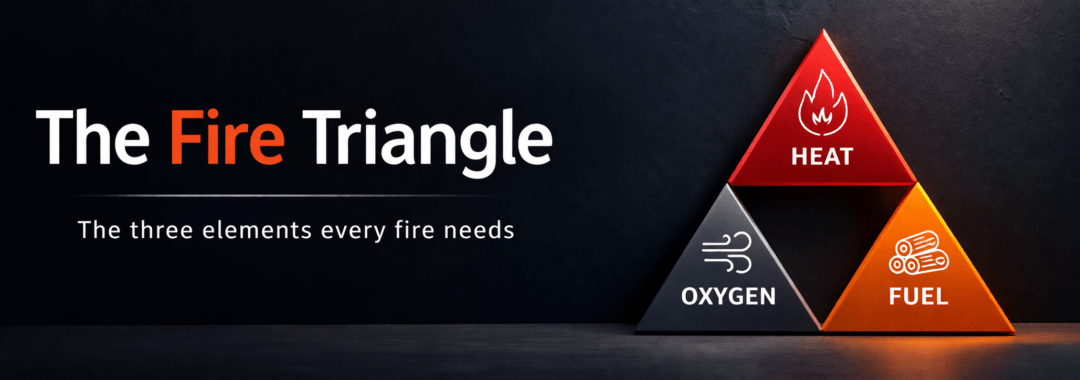
Fires can seem unpredictable, but in reality, every fire starts the same way. Fire science identifies three essential elements that must be present for a fire to ignite and continue burning.
This concept is known as the fire triangle, and it forms the foundation of modern fire prevention strategies. Understanding these elements can help homeowners, businesses, and property managers reduce fire risks in everyday environments.
What Is The Fire Triangle
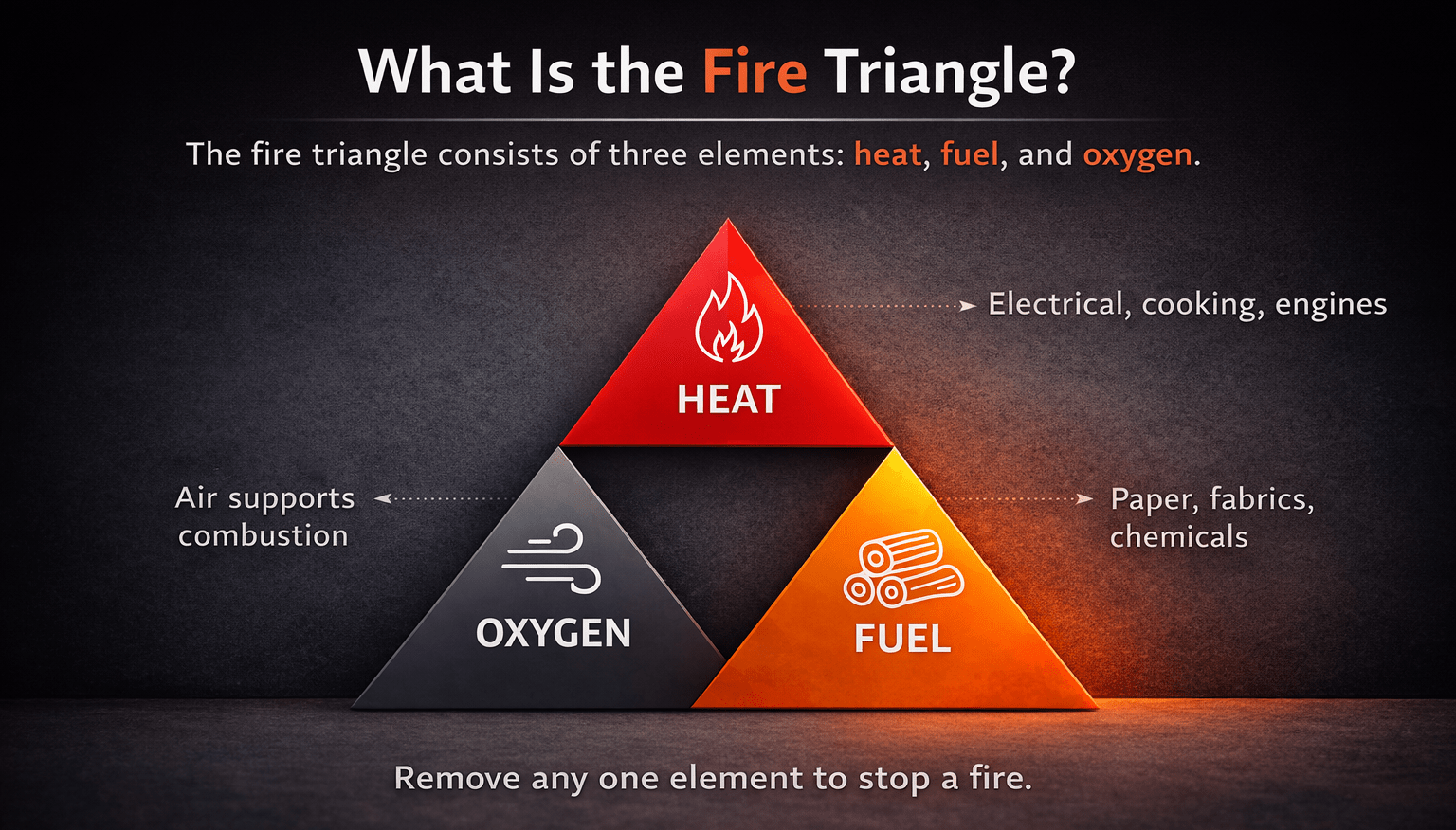
The fire triangle consists of three elements:
- Heat
- Fuel
- Oxygen
When these three components are present in the right conditions, a fire can start and spread rapidly. Removing any one of them can prevent a fire from igniting or stop it from continuing to burn.
Each element of the fire triangle plays a specific role in how fires start and spread. Understanding these individually can help identify risks in everyday environments.
🔥 Heat: The Ignition Source
Heat is what starts a fire by raising materials to their ignition point.
Common sources of heat include:
- Electrical faults or overloaded circuits
- Cooking equipment and open flames
- Vehicle engines and mechanical systems
- Space heaters and heating equipment
Even small or consistent heat sources can ignite nearby materials over time.
🪵 Fuel: What Feeds the Fire
Fuel is any material that can burn and sustain a fire.
Common fuels found in homes and properties include:
- Paper and cardboard
- Furniture and fabrics
- Plastics and rubber
- Gasoline, paint, and other chemicals
The more fuel available, the faster and more intense a fire can become.
🌬 Oxygen: The Enabler
Oxygen supports combustion and allows a fire to continue burning.
In most environments:
- Oxygen is naturally present in the air
- Ventilation can increase fire intensity
- Even enclosed spaces can sustain fires
Because oxygen is difficult to eliminate, fire prevention often focuses on controlling heat sources and reducing available fuel.
How This Applies to Fire Prevention
Understanding the fire triangle makes fire prevention more practical. Reducing fire risk often comes down to controlling one or more of its three elements: heat, fuel, and oxygen.
In everyday environments, this can include:
- Limiting heat sources through safe electrical use and proper equipment maintenance
- Reducing fuel by organizing and safely storing flammable materials
- Keeping ignition sources away from combustible items
- Using materials that help resist heat and reduce fire spread
Small, proactive steps in these areas can significantly reduce the likelihood of a fire starting or spreading.
Final Thoughts
Fire safety isn’t just about reacting in the moment—it’s about understanding the conditions that allow fires to start in the first place.
By recognizing the roles of heat, fuel, and oxygen, you can take simple, proactive steps to reduce risk in homes, garages, and workspaces.
In higher-risk environments, adding protective materials can provide an additional layer of defense against heat and fire exposure.
Sources & Further Reading
Subscription
This post was designed to be a quick, practical update that’s easy to share with others and use in conversations about wildfire safety. If you’d like to receive future updates, mitigation insights, and useful resources, subscribe below.
Join Our Mailing List
Smart wildfire protection starts here.
Thank you for subscribing!
You’re now on the list.